

Welded Artwork That Turns Scrap Into Legend

A rusted gear is not supposed to become a dragon’s shoulder. A bent chain is not supposed to suggest the curve of a horse’s mane. Yet in the hands of a skilled maker, those forgotten pieces become welded artwork with movement, attitude, and a story built right into the surface. That is the thrill of collectible scrap-metal sculpture: you can see where it came from, while also seeing exactly what it has become.
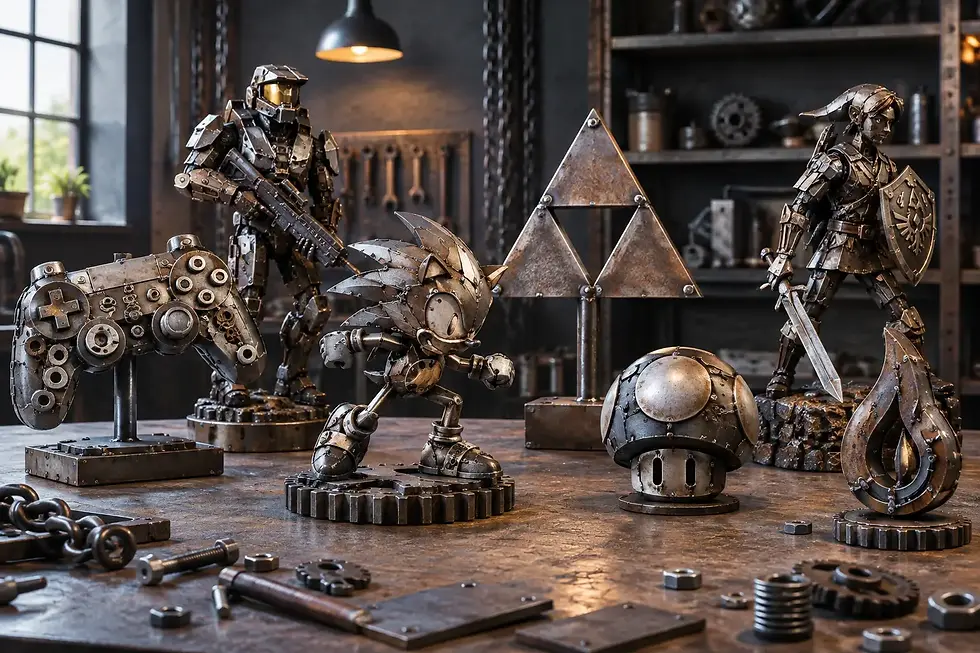
For collectors, welded sculpture offers something factory-made figures cannot fake. Every bolt has a history. Every weld line records a human decision. Every finished piece has its own stance, texture, weight, and personality. It is industrial material reborn as a display piece that belongs in a gaming room, office, workshop, entryway, or shelf packed with treasures.
Why Welded Artwork Feels Different
Welded artwork lives at the intersection of engineering and imagination. The materials begin as practical things: nuts, washers, sprockets, springs, chains, sheet metal, and hardware built for motion or machinery. The artist looks past their original job and sees armor, feathers, claws, instruments, wheels, or a character’s unmistakable silhouette.
That process gives the finished sculpture a visual language all its own. A smooth resin collectible can capture a familiar character or creature, but it rarely carries the same physical grit. Reclaimed metal has scars, patina, tool marks, and texture before the maker even begins. Welding turns those separate fragments into a figure with a new purpose.
The result is not just metallic decor. It is a small act of transformation. The same parts that once sat in a garage bin or powered a machine can become a roaring beast, a battle-ready warrior, a musician caught mid-performance, or a vehicle ready to tear down an imaginary highway.
Handmade Means No Two Stories Match
The phrase “one of a kind” gets used often in the collectibles world. With true handmade welded sculpture, it means something concrete. A maker may revisit a favorite subject, but the exact gear teeth, chain links, weld placement, and reclaimed components will change from piece to piece. Even works inspired by the same creature or theme carry different proportions and details.
That variation is part of the value, not a flaw to work around. One collector may fall for a sculpture because its broad shoulders and dense hardware feel powerful. Another may want a lighter, more detailed piece where springs create texture and smaller bolts form expressive features. There is no assembly-line sameness, and that makes each work feel chosen rather than merely purchased.
It also means buyers should expect a little raw character. Recycled metal may show oxidation, color variation, or marks from its earlier life. Those details should be intentional and secure, but they will not look like uniform paint sprayed over plastic. If you want perfectly identical finishes, mass production may fit better. If you want visible craftsmanship and personality, handmade metal is in its element.
From Scrap Pile to Sculpture
A strong welded piece begins long before the first spark. The artist sorts materials by shape, scale, texture, and potential. A large washer might become an eye surround. A curved wrench handle could suggest a tail. A cluster of chain links can build muscle, fur, or flowing fabric. The best choices make you look twice and think, “Of course that is what this part was meant to be.”
Then comes composition. Metal parts are heavy, rigid, and less forgiving than clay. The artist has to build a pose that reads clearly while keeping the sculpture balanced. A leaping animal needs an energy that feels believable, but it also needs a stable base. A vehicle needs recognizable geometry without losing the rough mechanical charm that makes recycled-metal art exciting.
Welding brings the form together, one deliberate connection at a time. It is both structural and expressive. Thick, bold welds can reinforce an industrial look. More controlled joins may disappear into the design so a tiny hand, wing, or weapon remains readable. Afterward, the maker may clean select areas, shape sharp edges, add a protective finish, or preserve the natural weathered tones that give the piece depth.
The Details Collectors Notice
The longer you look at welded sculpture, the more the small choices start to matter. A gear positioned at the hip can suggest motion. Offset bolts can create eyes that feel alert rather than blank. The spacing of links in a chain can turn a stiff silhouette into something that appears to breathe.
Those details are why a sculpture can feel alive even though it is made from cold material. It is not about copying every feature realistically. It is about choosing the right elements to make the subject instantly recognizable and emotionally charged.
Choosing a Sculpture for Your Space or Collection
A welded sculpture earns its place when it connects with something you already care about. Start with the world you want to bring into the room. Wildlife and insects can add a fierce natural presence. Musicians and sports figures bring movement and personal passion. Sci-fi, fantasy, anime, cartoon-inspired, and warrior pieces turn a shelf into a portal to the stories that have stayed with you.
Scale matters as much as subject. A compact sculpture can command attention on a desk, bookshelf, or side table, especially when its silhouette is strong. Larger work has more visual weight and can anchor a mantel, media console, entry table, or dedicated collection display. Before choosing, measure the surface and leave breathing room around the piece. Metal art looks strongest when its outline is easy to see.
Lighting changes the experience too. Side lighting can pull out shadows between gears and chains, while warmer light emphasizes rich rust tones and darker steel surfaces. Bright overhead light may flatten finer textures. If the sculpture has an especially detailed face, cockpit, instrument, or armor pattern, place it where you can approach it and enjoy the construction up close.
For a gift, think beyond generic categories. The best welded artwork gifts land because they say, “This was made for your corner of the universe.” A guitarist may love a metal musician. A car enthusiast may want a reclaimed-metal ride. A fantasy fan may be drawn to a dragon, knight, or other legendary figure. Someone with a home office may appreciate a striking desk companion that makes every video call more interesting.
Durability Has Its Own Kind of Drama
Metal sculpture feels permanent because it has real physical presence. It is heavier than most standard figurines, harder to knock over, and built for display rather than disposable novelty. Still, durable does not mean indestructible. Fine extensions, narrow weapons, antennas, or delicate chain details deserve thoughtful handling.
Keep a welded sculpture indoors unless it is specifically made and finished for outdoor exposure. Humidity, direct rain, salty air, and extreme temperature swings can alter the metal over time. Some collectors love a changing patina. Others prefer to preserve the original finish as closely as possible. Neither choice is wrong, but the display environment decides much of the outcome.
For routine care, a soft dry cloth is usually enough to remove dust. Avoid harsh cleaners and abrasive pads that can scratch protective coatings or strip the surface character that makes reclaimed metal compelling. Lift a piece from its strongest structural area rather than grabbing a thin detail. If you are moving it often, consider a stable shelf, tray, or display base that reduces accidental bumps.
A Better Alternative to Generic Decor
There is nothing wrong with clean, matching decor. But a room filled only with matching objects can start to feel like it came preloaded. Welded art breaks that spell. It introduces texture, story, and a little mechanical rebellion without asking the entire room to become a workshop.
It works especially well when paired with contrasting materials. Set dark steel against warm wood, a pale wall, glass shelving, or a clean modern desk. Let the sculpture be the rough-edged focal point. Its patina and welded detail do the visual heavy lifting.
At Metalsouls, that spirit shows up in handmade sculptures built from reclaimed metal and shaped around the passions collectors bring to their displays. The point is not to make scrap look precious by hiding where it came from. The point is to show that a gear, bolt, or chain can carry real character when imagination gives it a second life.
The best piece is not necessarily the biggest or the most elaborate. It is the one that makes you pause every time you pass it, notice a new detail, and remember why you chose something made with sparks, steel, and a little bit of legend.


Comments